SILENT HILL: Townfall Stealth & Hiding Guide — Peeking, Line of Sight & Getting Out Clean
Published 2026-09-237 min read
How stealth works in SILENT HILL: Townfall: crouch behind cover, lean and peek with R1, break line of sight, use lockers and cabinets, and never let an enemy watch you hide.
Combat isn't always an option in SILENT HILL: Townfall — often you will have to sneak past enemies to survive, and some creatures can only be evaded, never fought. This guide covers the stealth toolkit the game teaches (and the parts it doesn't).
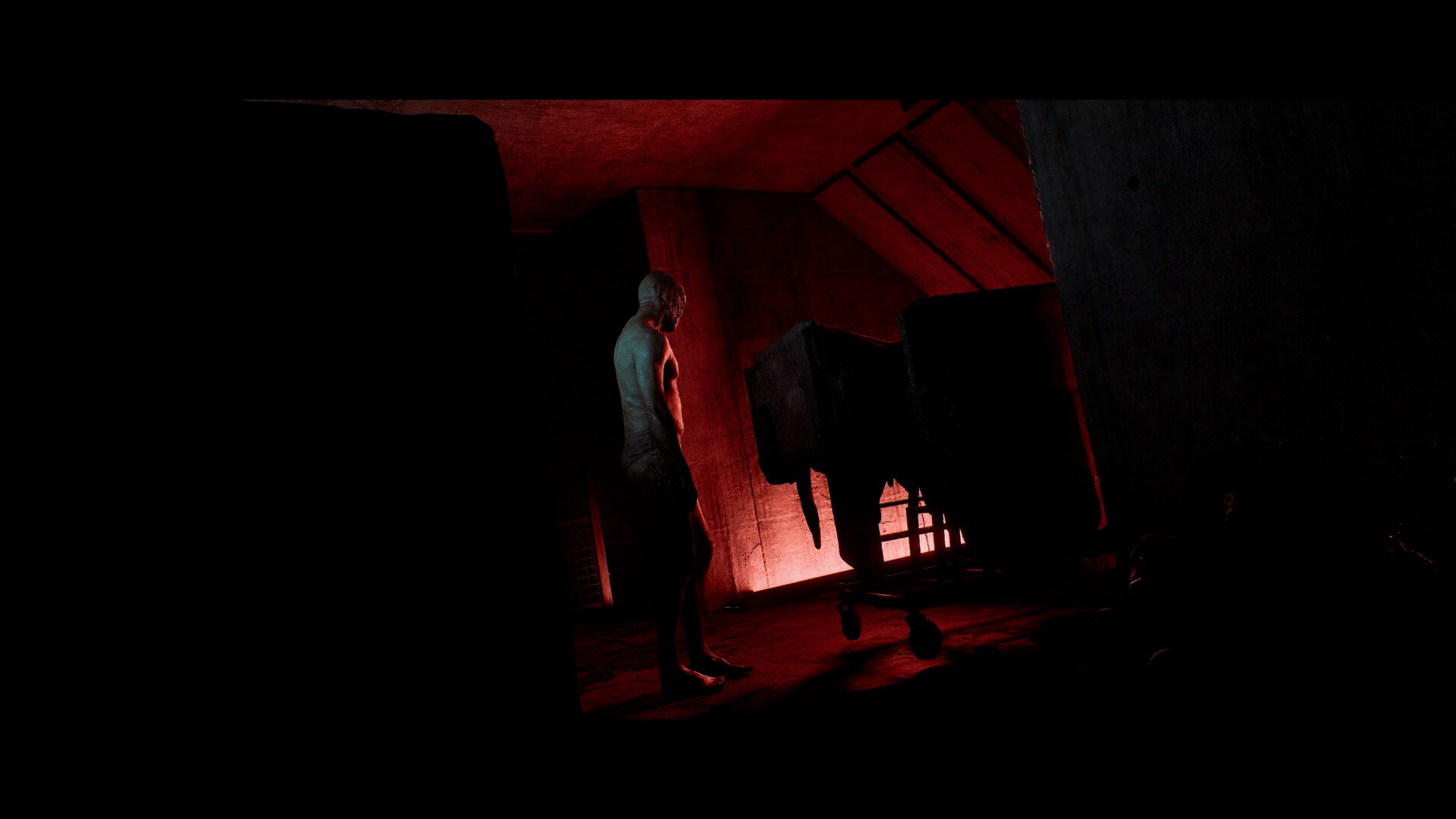
The first rule: your eyes are a liability
Townfall is first-person with a 2.35:1 cinematic frame — wider at the sides, shorter vertically. It looks like a film and behaves like a blindfold: monsters approach from your side or behind with almost no visual warning. Build these two habits immediately:
- Listen constantly. Footsteps and vocalizations are your primary threat detector — the 3D audio mix is precise enough to position enemies around you. Play with headphones.
- Scan with the CRTV. The handheld TV reveals enemy positions through walls and fog. Raise it with L1 whenever you suspect company. Full mechanics in the CRTV guide.
The stealth toolkit
- Duck behind cover (Circle). Fences, signs and parked cars all break a pursuer's sightline. Ducking is fast and silent — it is your default reaction to any unwanted attention.
- Lean and peek (hold R1 + right stick). Lean around corners or peek over the top of cover to check enemy positions before committing. Combining the peek with the CRTV's directional markers is the game's full detection loop — you see where they are without being seen yourself.
- Crouch-walk for distance moves. The newsagent run in Part 1 teaches the pattern: wait for the creature to run to the far corner, crouch-walk to the nearest barrier (roll cage, stacked crates), use it as a wall, and loop around its backside while the enemy circles away.
- Break line of sight, then move. You can often lose an enemy simply by rounding a corner or ducking behind something — their search is visual, so a broken chase is usually a finished chase.
- Hide in furniture. Cabinets, closets and lockers are functional hiding places: slip inside and watch the searcher through the crack in the door or on the CRTV.
The rule the game will punish you for missing
If an enemy sees you slip into a hiding place, they will chase you down and pull you out. Hiding is not an invincibility button — it is a bet that nobody watched you climb in. Before entering any locker or cabinet:
- Confirm the enemy's facing with a peek or a CRTV scan.
- Never hide in plain sight on a straight approach — break line of sight first, then duck in.
- If you are mid-hide and the door opens anyway, be ready to run; being pulled out costs you health and usually the supplies on your back.
The economics of evasion
- Stealth is mandatory in stretches. Several sequences give you no weapons, no ammunition, or a creature that cannot be fought. Treat these not as combat levels gone wrong but as the game's real genre: a stealth game wearing a horror mask.
- Supplies are scarce on purpose. Planks break, ammunition runs dry, healing items are few. Every stealth detour you avoid is a plank you keep — see the combat and survival guide for the resource rules.
- The map makes you blind. Checking the map holds it up in front of your face. Open it indoors or behind cover — never in the middle of a street you have not scanned.
A clean-exit checklist
- Heard something? Stop. Raise the CRTV (L1).
- Mark the enemy's direction and distance on the screen.
- Plan the route: cover to cover, not through the open.
- Peek (R1 + right stick) before every exposed crossing.
- Cross while the enemy moves away — not while it stands still.
- Spotted? Break line of sight immediately, duck, then re-scan before moving again.
- Cornered with no route? Cabinet, closet or locker — out of view.
Forced stealth is the most divisive part of Townfall's reception — it anchors both the highest praise (IGN Japan's "hardcore stealth") and the lowest scores (the 60s on Metacritic). Either way, it is not optional: master the loop above and the fog's most demanding stretches become a rhythm instead of a wall.